Posts Tagged writing
An Alphabet of Poisons
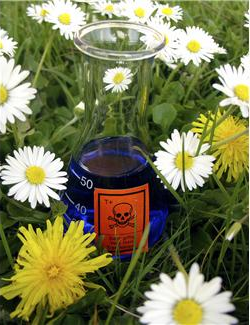
We’re surrounded by toxins.
Truth is, most households are filled with handy poisons. You don’t need access to something exotic and unique in order to whack some fictional characters. Start at home. That’s what I did when I needed to provide death-by-poisoning for a character in a story.
There are a lot of gruesome things you can do to the human body and I wanted something relatively painless and quick, and since the setting is back in the 1930’s I don’t have to worry too much about inquests, autopsies, or possible future exhumation.
Compared to the recent past, nowadays it is much more difficult to obtain products that also happen to be potentially poisonous. When my dad was a kid, interested in chemistry (and things that go BOOM!), he could just drop by the local pharmacy and ask them to order up a batch of something. Alas, the permissable behaviors of the fifties and sixties gave way to the endless “what-ifs” that produced an absence of murderous products at the ready.
Probably not a bad thing, really.
Over the years I’ve collected useful books about poisons, alkaloids and such. If you’re a gardener or take an interest in botany, well then you already know that poisons are all around us in the landscape. Even those lovely tropical plants we decorate our homes with, and send as gifts to people on the mend from illness or injury, are potential hosts for many a deadly compound. I’ll just let you think on the irony of that for a moment.
If you’re interested in committing fictional murder through the use of poison, here’s a handy list to peruse. It is by no means exhaustive. Keep in mind that virtually any compound can be dangerous if consumed in the wrong quantity.
A is for ARSENIC
B is for BISMUTH
C is for CYANIDE
D is for DIGITALIS
E is for EPHEDRA
F is for FLUORINE
G is for GELSEMIUM
H is for HEMLOCK
I is for INDIAN LICORICE
J is for JIMSONWEED
K is for KAFFIR LILY
L is for LABURNUM
M is for MONKSHOOD
N is for NIGHTSHADE
O is for OPIUM
P is for PHOSPHORUS
Q is for QUASSIA
R is for RICIN
S is for STRYCHNINE
T is for THALLIUM
U is for URTICA
V is for VANADIUM
W is for WAKE ROBIN
X is for XENON
Y is for YEW
Z is for ZINC

There are literally thousands of possibilities when you put the black pot in your antagonist’s hand. But be aware that poisoning is a tricky business. The effectiveness of any compound on the human system varies tremendously based on physical fitness, weight and mass, and even natural resistance to toxins. It’s a good idea to keep in mind that many of the deadly compounds we take for granted today have only been discovered or made accessible in the last century.
Interested in some case studies?
1. King of Poisons: A History of Arsenic
2. Handbook of Poisonous and Injurious Plants
3. Drugs, Poisons and Chemistry (Essentials of Forensic Science)
4. Mind-Altering and Poisonous Plants of the World
5. The Poisoner’s Handbook
There you go, a helpful list of reference books that talk about some of the naughty people who poisoned or attempted to do-away-with various enemies and loved ones. Some of these are shockingly effective, others surprisingly ineffective. And it is true, history demonstrates that women are far more prone to murder with the use of poisonous substances than to whack someone over the head with a big stick or shoot their adversary.
 In case plants aren’t your thing, here’s a handy Botanical Name-to-Common Name chart for cross-referencing your facts. The last thing you want to do is kill off a character with a compound that hasn’t been refined. Well, what do you think? Would you put the poison in your fictional assassin’s hand? And if you did, which one would you choose?



 Lesann Berry